
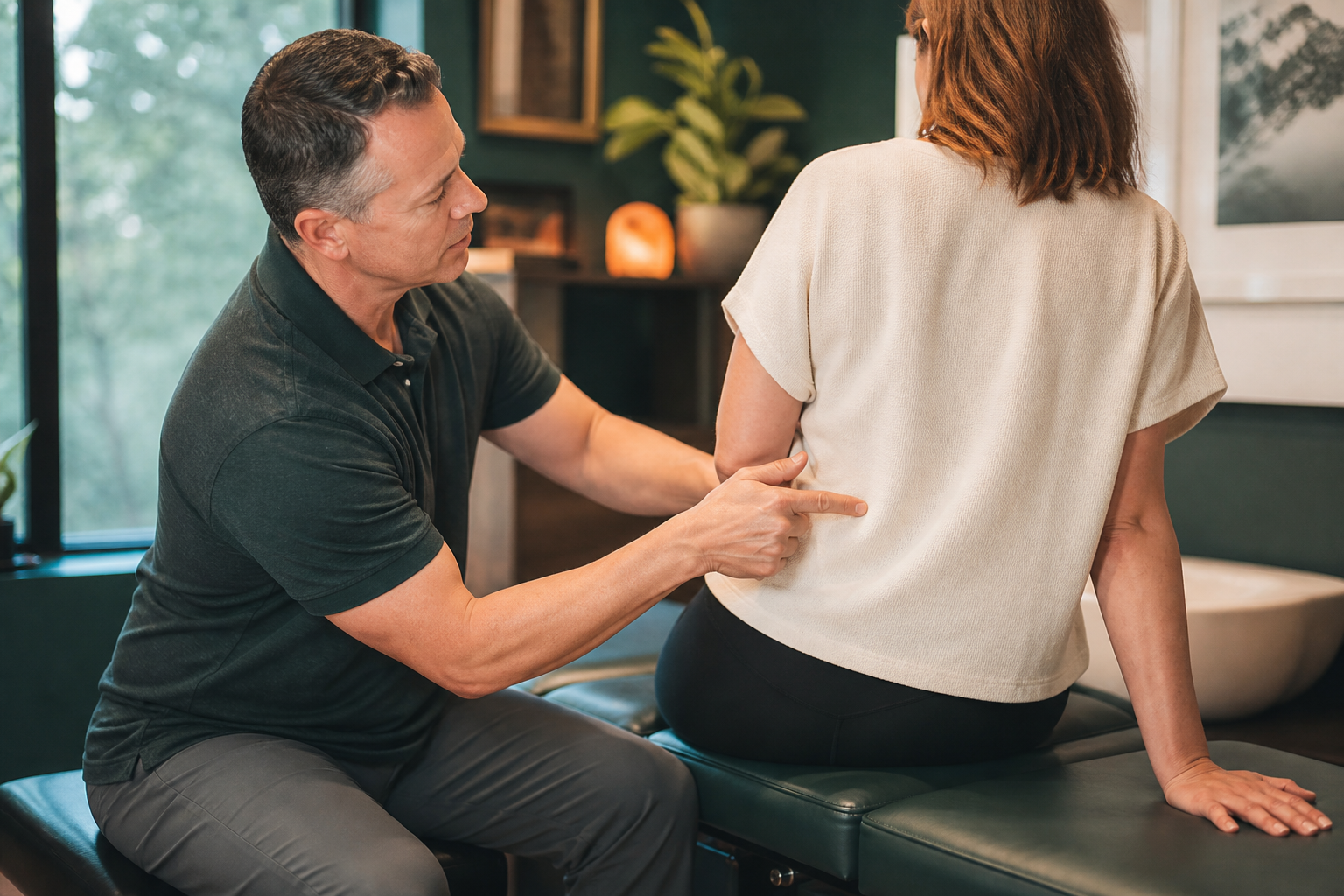
Sciatica can turn simple things like getting in the car or sitting at a kids' game into a real struggle. That sharp, burning, or zinging pain down the leg can make you dread long drives, workdays, or even relaxing on the couch. Summer around Austin often makes it worse — more road trips, more traffic, more outdoor events, and more time in folding chairs. At our South Austin office, we look for the root cause so you can get back to moving, playing, and living with more ease.
What sciatica really is and why it hurts so much
Sciatica is not just general back pain. It is irritation or pressure on the sciatic nerve, which runs from your lower back through your hips and down each leg. When this nerve is upset, it can cause pain, numbness, or tingling anywhere along that path.
Sudden loss of bladder or bowel control or major leg weakness can be a medical emergency and needs immediate attention. Even if your symptoms are milder, getting a proper evaluation is important so the problem does not quietly get worse.
- Herniated or bulging discs in the lower back
- Spinal misalignments that crowd the nerve space
- Tight hips or glutes, such as piriformis syndrome
- Pregnancy-related posture and weight changes
- Past injuries or auto accidents
- Sharp, burning, or shooting pain down the leg
- Numbness, tingling, or pins-and-needles
- Pain that worsens with sitting, driving, or bending
How we diagnose sciatica at our office
We start by listening — when the pain started, what makes it better or worse, and what you need your body to do. We ask about your work setup, driving time, sports, and any recent falls or auto accidents.
Next comes a physical and neurological exam: posture, range of motion, orthopedic tests, and reflex, strength, and sensation checks. When needed, we may review existing imaging or refer you for X-rays or MRIs. Your sciatica treatment in Austin should match your exact situation — not a one-size-fits-all plan.
Chiropractic options that target sciatic nerve pain
Gentle chiropractic adjustments help improve joint motion and alignment in the lower back, pelvis, and hips so there is often less pressure on the sciatic nerve.
Soft tissue work for tight hips, glutes, and low back can stop tight spots from tugging on the spine or squeezing the nerve. In some cases, traction or decompression-style methods help create more space to ease disc pressure.
We also share simple home exercises, posture tips, and ergonomic advice so you have tools to calm flare-ups between visits. Our focus is helping your body move better — not just numbing symptoms.
Natural ways to support healing between visits
Movement that is usually easier on sciatica includes walking on flat surfaces, gentle swimming or water walking, and light morning mobility for hips and low back.
At home, many people feel better with short ice periods for sudden spikes, gentle heat for stiff muscles, stretches that do not cause sharp pain, and alternating short rest with short walks.
Ergonomics matter too: adjust car seats so hips and knees are level, keep your back supported while driving, set your desk so feet rest flat and the screen is at eye level, and lift with your legs — not your back.
Why local sciatica care in Austin matters
When sciatica is acting up, driving across town for help is the last thing you want. Having a chiropractor close to home in South Austin makes it easier to keep up with care.
Sciatica treatment works even better when paired with ongoing wellness care. Regular check-ins help keep your spine moving and your body ready for trips, festivals, and school-year routines. We explain what we are doing, answer questions, and work with other providers when co-management helps.
Take the next step toward lasting relief
If sciatic pain is limiting your daily activities, we are here to help. Our approach focuses on the root cause — not just the symptoms. Contact us or book online to create a personalized care plan that fits your needs and lifestyle.
Want a deeper dive? Read our full guide on Sciatica Treatment Austin TX.
Book an appointment
